Quit Your Job, Film the Breakdown, Post the Rebrand: How Career Changes Became Content
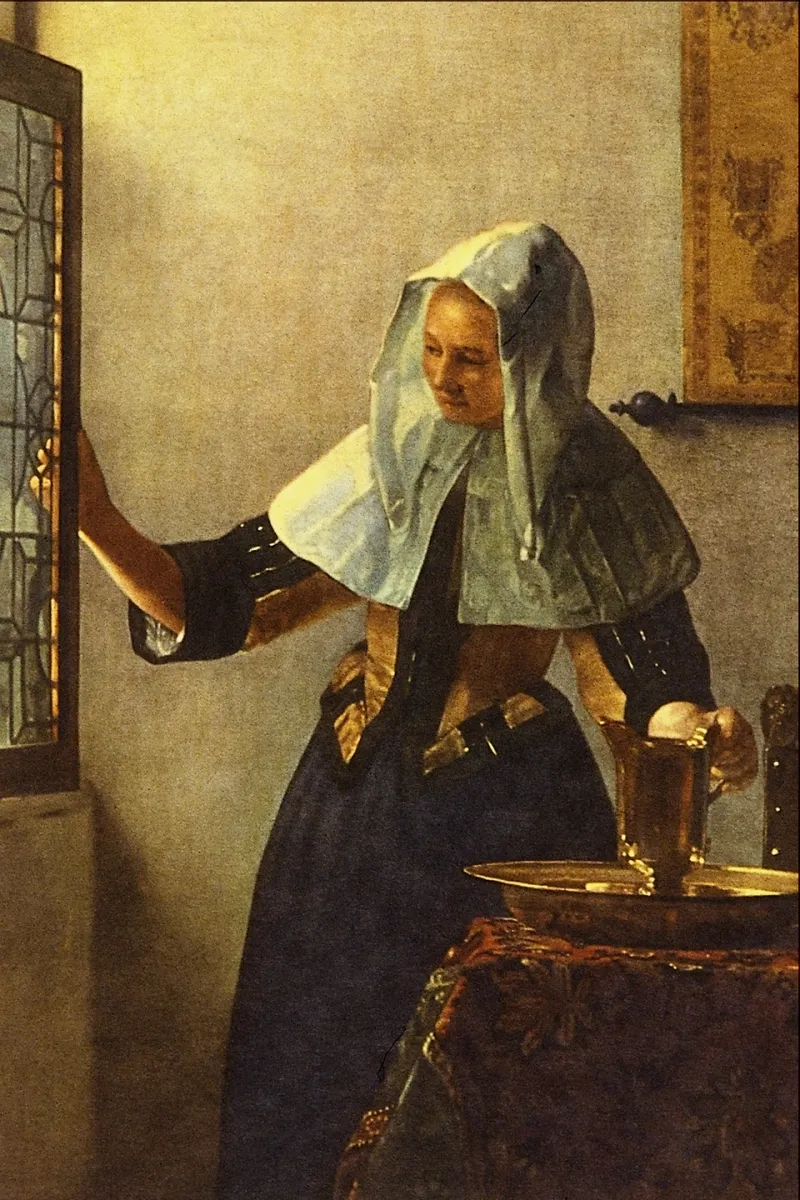
Photo: Johannes Vermeer, Public domain, via Wikimedia Commons
Somewhere between the 'last day at my corporate job' TikTok and the 'six months into my creative era' update, the career change stopped being a private crisis and became a public performance. And honestly? We are all watching every single second of it.
The professional pivot has always been a little dramatic. People have been quitting stable jobs to chase dreams since long before the internet existed to document it. But something shifted when young professionals realized that the transition itself — the uncertainty, the identity overhaul, the aesthetic reinvention — could be just as monetizable as whatever they were pivoting toward. Maybe more so.
The Origin Story Is Everything
Every great career-change content arc needs a solid origin story. You know the format by now: the fluorescent-lit office, the soul-crushing commute, the moment of clarity that usually happens while journaling or during a hot girl walk. The before footage is always a little deliberately bleak — muted tones, tired eyes, a desk that communicates quiet desperation. Because the before only works if it makes the after look like a miracle.
This is not accidental. Gen Z has grown up watching enough reality TV and YouTube vlogs to understand narrative structure intuitively. They know that audiences need a villain (the old career), a turning point (the quit), and a hero's journey (the rebrand). What used to be a painful, nonlinear mess of financial anxiety and imposter syndrome is now packaged into a digestible content series with chapter titles.
And the audience? Completely obsessed. Videos tagged #careerchange and #quittingmyjob routinely rack up millions of views. The comment sections are full of people saying 'this is exactly what I needed to see' — which tells you something important. It's not just entertainment. It's permission.
The Pressure to Make Chaos Look Intentional
Here's where it gets complicated. When you're documenting a career transition in real time, you're not just sharing — you're curating. The messy Tuesday where you cried into your laptop and applied to seventeen jobs you weren't qualified for doesn't make it into the final cut. What makes it in is the breakthrough moment, the new laptop setup, the first client, the income milestone revealed in a YouTube thumbnail with a very specific font.
The result is a version of professional growth that looks almost suspiciously clean. Every step appears intentional. Every setback gets reframed as a 'lesson.' The confusion and the grief of leaving behind an identity you spent years building — all of it gets smoothed over by good lighting and a trending audio track.
Career coaches and therapists who work with young professionals have started flagging this phenomenon. When the expectation is that your career change should look aesthetic and purposeful from day one, the people who are actually in the middle of one — scared, directionless, maybe a little financially unstable — can feel like they're doing it wrong. Like their pivot isn't cinematic enough to be valid.
When the Content Becomes the Career
Of course, there's a twist that makes this whole thing even more meta: for a significant chunk of the people doing it, documenting the career change is the new career. The pivot to freelance design funds itself partly through the 'pivoting to freelance design' content. The journey from finance to food blogging gets sponsored before the food blog even has a readership.
This is either genius or completely unhinged, depending on your perspective. Probably both.
What it's created is a class of young professionals whose personal brand and professional identity are so intertwined that separating them is basically impossible. Your career isn't just what you do — it's the story you're telling about what you do, in real time, to an audience that has opinions about your next move. The comment section becomes a kind of crowdsourced career counseling session, which is either a great support system or a deeply weird way to make major life decisions.
The Glow-Up Industrial Complex
Brands figured this out fast. The 'career change' content niche is now prime real estate for productivity apps, online course platforms, portfolio website builders, and every aesthetic desk accessory you can imagine. If you're watching someone quit their PR job to become a ceramicist, you're also being sold the exact notebook they're using to 'map out their vision.'
This commercial layer doesn't necessarily make the content fake — plenty of these creators are genuinely in the middle of real, difficult transitions. But it does mean that the incentive structure rewards a specific type of career change story. Inspiring. Visual. Upwardly mobile in some way, even if it's unconventional. The person who left a stable job and quietly took a step backward financially to find better work-life balance doesn't go viral. The person who left a stable job to build a six-figure Etsy store absolutely does.
What gets amplified, in other words, is the version of professional reinvention that still ends in success. Which means the content is, almost by definition, survivorship bias with a ring light.
So Is Any of This Actually Useful?
Here's the thing though — it's not all performance and no substance. For a generation that watched their parents get laid off from companies they'd been loyal to for decades, seeing other young people take ownership of their professional narrative is genuinely radical. The message underneath all the aesthetic career-change content is actually kind of powerful: you are not your job title, and you can start over, and people will support you while you do.
There's also something to be said for the accountability aspect. Telling your audience you're making a change creates a kind of social contract that can push people to actually follow through on things they might otherwise quietly abandon. Public commitment has always been a motivational tool — the internet just gave it a comments section.
The problem isn't the documentation itself. It's when the documentation starts to shape the decision-making. When people choose which career to pivot to based partly on which one will make the best content. When the fear of a messy, un-aesthetic transition becomes a reason to stay stuck in something that isn't working. When the story you're telling your followers starts to feel more real than the actual experience you're living.
The Career Change You Don't Post
Maybe the most countercultural thing a Gen Z professional can do right now is make a major career move and simply... not make it a series. No 'day one' video. No mood board. No monthly income report. Just the quiet, unglamorous, genuinely difficult work of figuring out who you are professionally when no one is watching.
That version doesn't get a million views. It doesn't attract brand deals. But it might — just might — get you somewhere real.
Or post the whole journey. Film the breakdown. Make the rebrand. Just maybe let yourself be a mess about it first, off-camera, where the algorithm can't touch you.