Realness Is a Product Now — And Someone's Getting Paid to Sell Yours
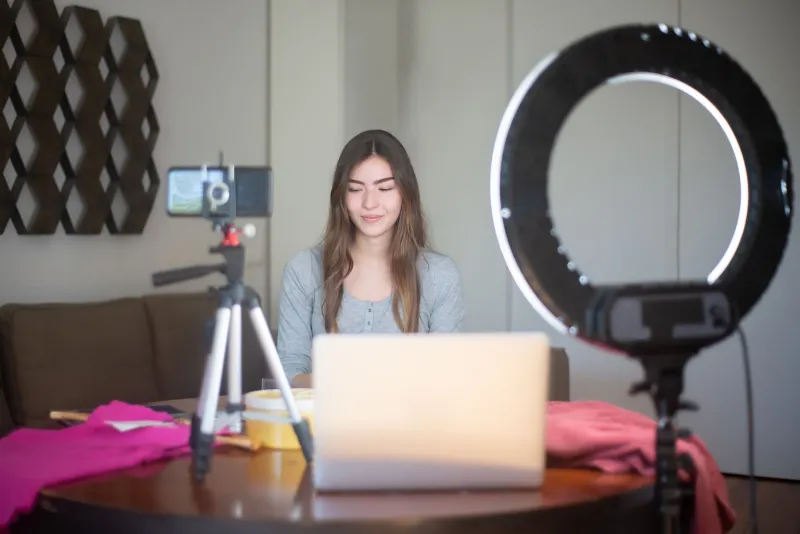
Somewhere between the "no-makeup" selfie with a full face of skin-tint and the "raw and unfiltered" TikTok filmed on a $1,400 iPhone, authenticity quietly became the internet's most expensive aesthetic. And the people cashing in aren't the ones being real — they're the ones engineering what real is supposed to look like.
We are living inside what might as well be called the Authenticity Industrial Complex. It has its own economy, its own workforce, and its own very specific vibe: messy bun, soft lighting, a cracked phone case that definitely isn't cracked by accident.
When "Just Being Yourself" Became a Full-Time Job
Let's be honest about what's actually happening here. The demand for relatable, unpolished, human content didn't organically bubble up from some pure place of collective longing. It was identified as a market gap, monetized, and handed back to us as a trend. The same influencer economy that once pushed impossibly curated feeds — the flat lays, the golden hour everything — pivoted hard when audiences started clocking the fakery. The solution wasn't to actually be real. It was to perform realness better.
Now there are literally people whose job title involves coaching creators on how to seem more "off the cuff." Authenticity consultants. Personal brand strategists who specialize in making you look like you're not trying. Editors who cut footage specifically to preserve the "awkward pause" that makes a creator seem genuine. The infrastructure behind a single "candid moment" can involve more labor than a mid-budget commercial shoot.
And Gen Z — the generation that supposedly demanded this shift — is caught in the middle of a trap it helped build.
The Relatable Persona Is Just a Different Kind of Costume
Here's the paradox nobody wants to say out loud: the pressure to seem authentic has become just as suffocating as the pressure to seem perfect. Maybe more so, because at least with perfection, the performance was obvious. With authenticity, the whole point is that it shouldn't look like a performance — which means the labor is invisible, and the anxiety is constant.
Creators talk about this in hushed tones. There's a particular kind of burnout that comes not from being too polished but from having to calibrate exactly how much chaos to show. Too put-together and you're "fake." Too messy and you're "a lot." The sweet spot — the relatable-but-aspirational, honest-but-not-uncomfortable zone — is a moving target that requires constant monitoring. That's not freedom. That's a different kind of cage.
The aesthetic markers of authenticity have also gotten weirdly specific. A vertical video filmed in a car. The slightly-too-long pause before speaking. Saying "I don't know, I've just been really in my head lately" before pivoting to a product recommendation. These aren't accidents. They're a vocabulary — learned, rehearsed, and now so widely replicated that they've become their own form of artifice.
The Economics of Unfiltered
Follow the money and the whole thing gets even messier. Brands have caught on that "authentic" content converts better than traditional advertising. Audiences trust a creator who seems real. So the briefs being sent to influencers now explicitly ask for content that feels organic — which is, if you think about it, the most absurd sentence in modern marketing. A paid advertisement asking to not look like a paid advertisement.
The creators who do this best — who can seamlessly weave a sponsored post into what feels like a genuine life moment — are genuinely skilled. But let's not pretend that skill is the same thing as honesty. It's craft. It's performance. And the audiences watching are increasingly aware of that, even if they can't always name what feels off.
There's also a class dimension here that doesn't get discussed enough. Performing authenticity well requires resources. Good lighting. A living space that looks casually stylish. The time to craft and post consistently. The ability to be "vulnerable" without it actually costing you anything — because for a lot of creators, the things they're being vulnerable about are already resolved, already processed, already safe to share. Real vulnerability, the kind that's messy and unresolved and genuinely risky, doesn't tend to perform well. It makes people uncomfortable. It doesn't get the brand deal.
Who's Actually Keeping It Real?
Ironically, the people who come closest to genuine authenticity online right now might be the ones who've entirely stopped trying to package themselves. The person posting a grainy photo with zero caption. The creator who went quiet for three months and came back without an explanation. The accounts that post inconsistently, don't have a niche, and definitely don't have a brand kit.
These people aren't building audiences the "right" way. They're not optimizing. And maybe that's exactly the point.
There's also something to be said for the creators who are upfront about the artifice — who say plainly, "this is a performance, I'm a persona, here's the work behind it." That level of transparency feels more honest than the carefully constructed mess of someone pretending they just happened to film themselves crying in good lighting.
So What Do We Actually Want?
Maybe the question isn't whether anyone online is actually being authentic. Maybe the more useful question is why we keep demanding authenticity from a medium that structurally can't deliver it. Social media is a publishing platform. Everything posted on it has been selected, framed, and shared with intention — even the stuff that looks accidental. Expecting it to be a window into someone's unmediated self is a little like expecting a movie to be real life because it's shot in documentary style.
That doesn't mean connection online is fake. It doesn't mean the people you follow aren't real humans with real feelings. But the version of them you're seeing has always been curated, even when the curation is "I'm going to seem like I'm not curating."
Gen Z didn't invent this problem — every generation has navigated the gap between public persona and private self. What's different now is the scale, the speed, and the fact that there's an entire industry dedicated to making the gap invisible while profiting from its existence.
Authenticity, at this point, isn't a vibe. It's a vertical. And someone is definitely getting paid to manage yours.


