Paying for the Past: Why Gen Z Is Dropping Serious Cash to Live in Their Parents' Childhoods
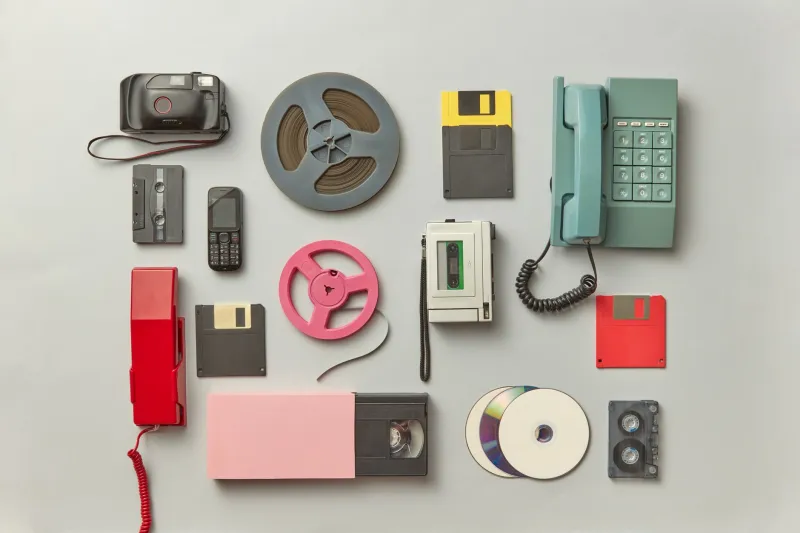
Let's set the scene. You're scrolling Depop on a Tuesday night, half-watching something on Netflix, and you stumble across a listing for a Razor A2 scooter — scratched up, one wheel slightly wobblier than the other, clearly dragged across every driveway in a suburban cul-de-sac circa 2002. The asking price? $185, plus shipping. And here's the wildest part: someone already has it in their cart.
Welcome to the nostalgia economy, where the past isn't just a vibe — it's a line item.
Over the last few years, something genuinely strange has happened to the resale and experience markets. Vintage goods from the late '80s through the early 2000s have exploded in price, '90s-themed summer camps are booking out months in advance, and brands are making millions reissuing products that were never even that good the first time around. The common thread? A generation — or two — so exhausted by the relentless churn of digital life that they're willing to pay a serious premium to pretend, just for a moment, that none of it exists.
The Depop Effect: When Childhood Junk Becomes Collectible Currency
Thrift stores used to be the domain of broke college students and dedicated vintage hunters who knew exactly what they were looking for. Now they're practically competitive sport. Goodwill's online auction platform regularly sells '90s and early 2000s items for prices that would make your head spin — Lisa Frank binders, original Game Boys, frosted-tip hair gel in unopened bottles. The algorithm has caught on. Sellers on Depop, eBay, and Mercari have figured out that slapping "Y2K aesthetic" or "early 2000s nostalgia" in a listing title is basically a markup machine.
But what's actually driving this isn't just savvy resellers. It's demand — real, emotional, almost desperate demand — from buyers who are attaching genuine meaning to objects that, historically speaking, were just cheap plastic toys. A Tamagotchi isn't a Tamagotchi anymore. It's a portal. It's proof that life once existed without push notifications and engagement metrics.
For Gen Z specifically, there's something extra complicated going on. Most of them weren't even around for the original run of this stuff, or were too young to remember it. They're not buying back their own childhood — they're buying their parents' childhood, or the childhood they absorbed through older siblings and early-internet nostalgia content. They're romanticizing an era they only ever knew secondhand, which somehow makes the longing even more intense.
Summer Camp Is Sold Out (And It's Not for Kids)
If you need more evidence that this is bigger than a Depop rabbit hole, look at what's happening in the experience economy. Nostalgia-branded adult summer camps have been popping up across the country — think Camp No Counselors, or the various '90s-themed weekend retreats that started as novelty events and are now fully booked institutions. Activities include things like lanyard-making, capture the flag, and cassette tape decorating. There's a talent show. People pay upwards of $500 for a weekend of this.
And honestly? It's selling out. Repeatedly.
The appeal isn't hard to decode once you sit with it. These experiences are explicitly offering something that modern life has made nearly impossible to access organically: boredom, disconnection, and low-stakes fun. No content to create. No performance required. Just... a color war and a s'more. In a world where every experience is immediately filtered through the question of "how does this look online," the idea of doing something purely for the feeling of it has become almost radical.
Authenticity as a Product — The Real Price Tag
Here's where it gets a little uncomfortable to think about. The very thing Gen Z says they're chasing — authenticity, simplicity, a break from the performative grind — has itself become a highly marketable product. Brands have clocked this hard. Nintendo re-releases the original Game Boy aesthetic in limited runs. Polaroid never actually went away — it just got repackaged for a market willing to pay $80 for a camera that takes blurry photos. Dr. Pepper brought back Crystal Pepsi energy (not literally, but spiritually). The nostalgia industrial complex is a real thing, and it is absolutely printing money.
What's fascinating — and a little bit sad — is that the "authentic" pre-digital experience is now being sold back to us at a markup that would have been unthinkable when the original version of that experience was free. You could find a Razor scooter at any garage sale in America for $5 in 2008. The scooter hasn't changed. The meaning we've projected onto it has.
This is what happens when a generation grows up inside an attention economy so intense that the concept of "not being perceived" starts to feel like luxury. Silence is expensive now. Analog is expensive. Anything that doesn't require a Wi-Fi connection is expensive.
What We're Actually Buying
Strip away the aesthetics and the resale markups and the branded camp experiences, and what Gen Z is really purchasing is a feeling — specifically, the feeling of not being overwhelmed. The pre-digital era (or the mythologized version of it that lives rent-free in the cultural imagination) represents a time when attention wasn't a resource being actively harvested. When you could be bored without it being a personal failure. When a Saturday afternoon could just be a Saturday afternoon.
There's also something worth naming about the class dynamics quietly embedded in this trend. Vintage nostalgia goods and curated retro experiences are not cheap, which means access to this particular form of escapism is increasingly tiered. The irony of paying premium prices to simulate the simplicity of an era when this stuff was just... regular and affordable is not lost on everyone buying into it. But the emotional pull is strong enough that the irony mostly gets shrugged off.
The Hook
Nostalgia has always been a powerful force in consumer culture — that's not new. What is new is the specific flavor of longing driving this particular wave, and how young it skews. We're watching a generation pine for an era they experienced mostly through osmosis, willing to spend real money to get closer to something they can't fully name but feel acutely missing.
Maybe the worn-out Razor scooter isn't really about the scooter. Maybe it's about the version of a Saturday afternoon it represents — one where the only thing tracking your attention was the pavement rushing under your feet and the very real possibility of a spectacular wipeout.
Honestly? For $185, that's not the worst thing you could buy.